Zamiast wstępu: neksjalizm albo przydatność alegorii (Marek Pąkciński)

Issue 31 of ‘Inscription’ is dedicated to interdisciplinarity in the sense of methods and forms of piecing together the knowledge from different disciplines of the humanities. It begins (after a short introduction) with a discussion by three philosophers from the Institute of Philosophy and Sociology of the Polish Academy of Sciences, exploring the opportunities and threats originating from interdisciplinarity that is understood in a multitude of ways: from the current inability of achieving it, due to forced commercialisation of research, through a critical reflection on the notionality of the sciences and the variety of their constraints, to a differentiation between cognitively fruitful relationships of various fields of study of humankind, versus empty ‘interdisciplinary gesture’.
The usual segments of the yearly (Essays and Materials, Editorial and Textologist Passions and Skirmishes, Varia, Reviews and Discussions) also feature content related to interdisciplinarity in the humanities. The articles published here discuss issues of [The literary-ness of name in urban spaces] (combining literary studies, language studies, geography, history and cultural studies), a comparativist and multi-disciplinary approach to the work of a revered Polish Baroque poet ([On Daniel Naborowski, comparatively]: knowledge of literature, history, cultural studies, linguistics, or even biology), or finally, [Digital humanities as bridge between disciplines] (‘topography of experience’ and ‘experience of topography’ in the ‘Atlas of the Holocaust Literature’, digital editing and the theories of drama, a practical reflection on the methods of publishing literary classics on the Internet). One article from the Varia segment explores the field of research which requires interdisciplinary methods due to its very nature: that is, ‘trans studies’ (transgender studies) in their relationship with literary studies. The final part presents reviews of two books: Tekstowe reprezentacje ruin (1760–1830) [Textual representations of ruins (1760-1830)] (a collective study) and winner of the Literary Award of the Capital City of Warsaw, Podziemny Muranów [Underground Muranów] by Jacek Leociak. The issue also includes a report from a panel discussion held to honour the thirtieth anniversary of our yearly, which took place on 15th January 2025 under the title Napisane na okoliczność i do użytku wspólnego [Written for the occasion and for communal use].
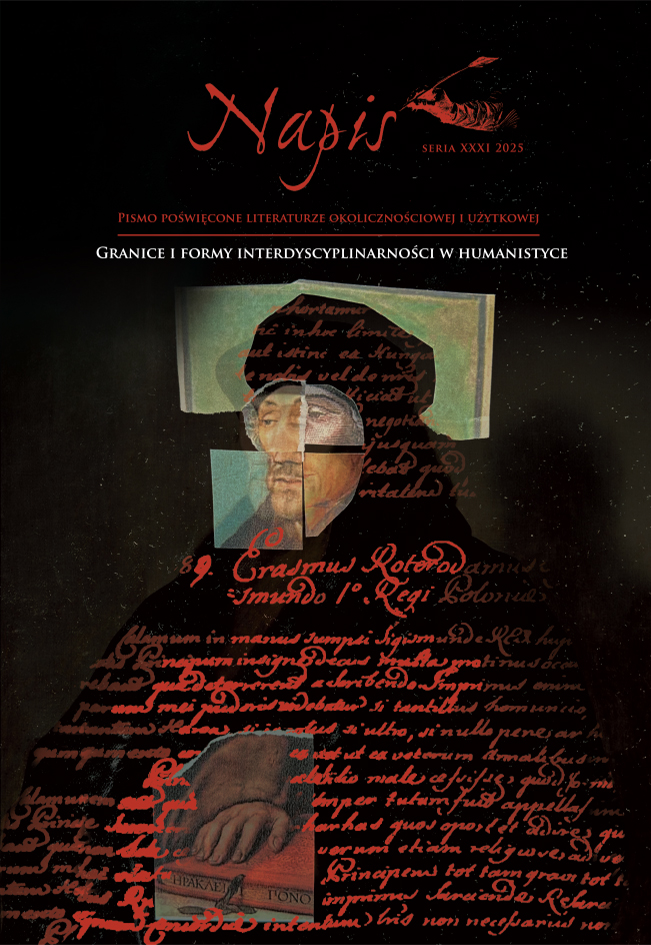
As is the case every year, the issue is completed by interesting graphics by students of the Academy of Fine Arts in Warsaw (ASP), created under the supervision of Dr Katarzyna Stanny, professor at ASP – this time devoted specifically to interdisciplinarity.
Dofinansowano ze środków Ministra Kultury i Dziedzictwa Narodowego pochodzących z Funduszu Promocji Kultury – państwowego funduszu celowego oraz Funduszu Popierania Twórczości Stowarzyszenia ZAiKS


Zamiast wstępu: neksjalizm albo przydatność alegorii (Marek Pąkciński)
Szymon WRÓBEL
Interdyscyplinarność jako krytyczna teoria liminalności
Artykuł (PDF) Show abstract Hide abstract
In this article, the author attempts to rethink the concept of interdisciplinarity within the modern university, assuming that researchers always remain part of a larger epistemic infrastructure or culture. The author sees the central problem of the contemporary knowledge production system as the ongoing process of knowledge commodification, with its multiple indicators – parameterisation, standardisation, rapid verification of hypotheses, the primacy of experiment over theory, alleged fact over concept, etc. The author distrusts the currently postulated “easy” idea of interdisciplinarity, understood as the free transfer of knowledge from one field to another, viewing it as a symptom of the contemporary “culture of speed”. Consequently, he seeks positive models of interdisciplinarity that are based not on analogies but on material confrontation with real-world problems and respect for the multiplicity of research practices. Finally, the author raises the question of tl possibility of a university that would be a place to bring together people from dif- ferent disciplines united by the recognition of a similar research problem, rather than by a program or grant. The author calls the new pattern of interdisciplinarity the “critical theory of liminality” or the “critical genealogy of knowledge”.
Adam LIPSZYC
Prawda jest na granicy
Artykuł (PDF) Show abstract Hide abstract
Above all things, the author focusses on the interdisciplinary approach in philosophy. The author points out that philosophy develops through revolutionising its approaches, and such revolutions can happen precisely thanks to expeditions to the boundaries of other disciplines. The author then highlights borderlands of this type, writing on how philosophically momentous the exploration of the boundaries of socio-political sciences, theology, literature and psychoanalysis can be. In this way, the article aims to justify its eponymous thesis, whereby the truth lies on the border.
Andrzej LEDER
Interdyscyplinarność – pomiędzy gestem a metodą
Artykuł (PDF) Show abstract Hide abstract
In the discussion on interdisciplinarity, the author introduces two notions: “interdisciplinary gesture” and interdisciplinarity as method. It demonstrates that, while “interdisciplinary gesture”, a somewhat ostensible action, is fairly common nowa- days, interdisciplinarity as a method is something extraordinarily difficult, both due to the theoretical character of contemporary academic studies (especially in the field of the humanities) and its practical constraints. The author concludes that the issue of interdisciplinarity as method (the relationship of various disciplines of knowledge with one another) has long been looked at in the field of philosophy.
Marcin KULA
Dlaczego nazwy miejscowe interesują mnie jako historyka?
Artykuł (PDF) Show abstract Hide abstract
Place names tell us a lot about history. They can testify to the past of a given locality. What is of even more interest to me, as someone who is interested in the recent times, is that they often become something of an alphabet for expressing thought. They are often a way of speaking about reality that is past, surrounding, or being created. From this angle, the act of giving a place a name, or of its removing, is more interesting than its constancy.
A change of name is carried out especially in case of a given community gaining control (which is explained in different ways) over an area. One wants to emphasise who a given area belongs to. This could be inhabiting an area which was more or less ‘virgin’ originally. It could also be the taking-over of already inhabited land by foreign forces, or the reclaiming of it by previous stewards. Another interesting case is colonial expansion, and the later emancipation of colonies, as well as acknowledgement of the rights of indigenous communities by the dominating groups, and thus acknowledgment of some indigenous place names.
In ethnically diverse lands, changes to place names can stem from the evolution of nationality politics. Often, political transformations, including revolutions, result in changes of place names. They can also be a reflection of the changes in the way of thinking of the communities on numerous issues.
Grażyna BORKOWSKA
O nazwach. Uwagi dyletanta
Artykuł (PDF) Show abstract Hide abstract
In the first part of the article, the author discusses cases of utilising names as information on the range of influence of certain countries, ethnic groups or cultures on the field of research. The conclusions emerging from these kinds of sources often modify the knowledge gained through official documents, as well as modifying ethnocentric views of professional and amateur historians. The second part of the work explores the dynamics of the shaping of urban names related to Warsaw, from the final quarter of the eighteenth century to the years immediately following the end of World War II. The conclusion of these discussions ascertains that the interest in urban names of the authorities, scholars and the public culminates in watershed periods and is non-continuous – as well as the fact that history never leaves the gates of the city.
Jacek LEOCIAK
O muranowskich topografiach i muranowskich toponimach
Artykuł (PDF) Show abstract Hide abstract
The reflection on the toponyms of the Warsaw district of Muranów encompasses four historical periods: the period up until the end of the nineteenth century, the interwar years, the times of the Ghetto and the post-war period. The etymology of two selected streets is explored: Smocza street and Nalewki street. Etymological hypotheses and their influence on the cultural heritage of these places are presented. In the interwar period, the names of Muranów streets gain a pejorative meaning in the press, literature or guidebooks to Warsaw, becoming synonymous with destitution, squalor and chaos, all of which is underpinned by anti-Semitic stereotypes. The peculiar topography of the Ghetto, degrading to the human being, the oppressive space of a closed district, create, in the experience of its inhabitants, a singular map, whose streets and their names undergo a certain metamorphosis, reveal their horror and manifest a new, Ghetto hierarchy of prestige. The final part of the article discusses the radical change to the network of streets, the disappearance of some and appearance of others, the preserved pre-war names, as well as new ones.
Krzysztof MROWCEWICZ
Naborowski – warsztatowo, ale bona fide
Artykuł (PDF) Show abstract Hide abstract
The article is devoted to the analysis of style of Daniel Naborowski. As a critical edition of the poet’s works has not yet been created, the author selects a set of texts that do not raise any doubt for scholars (especially the pieces within the manuscript Wirydarz poetycki (The poetry cloister]). Naborowski’s art of versification is analysed (metre, rhymes), and so is his poetic rhetoric. The author states that the poet is a continuator of the Kochanowski tradition, which he transforms in a Mannerist spirit, albeit never departing far from Renaissance Classicism. The author recognises the carefully edited phonic layer (the richness of instrumentation of phones of various nature) as a distinguishing element of Naborowski’s poetry. The studies conducted also lead to the conclusion that attributing translations of Petrarch or Du Bartas to Naborowski is a very uncertain hypothesis.
Magdalena Kinga GÓRSKA
Impresa Daniela Naborowskiego – kontekst teoretyczny
Artykuł (PDF) Show abstract Hide abstract
The article explores the theoretical context of the poem Impreza: Calando, poggiando, to na dól, to do góry [‘Impreza: Calando, poggiando, up again, down again’] by Daniel Naborowski, analysed from the perspective of the sources of the impresa and emblem that may have been known to the poet. Works by Calvinist authors were noted (T. de Bèze, A. La Faye, J.J. Boissard, G. de Montenay), and those by the German-language (c.g. N. Reusner, J. Sambucus) and Paduan circles (G. Belloni, G.B. Arrigoni), as well as the evidence of using impresa in the Polish-Lithuanian Commonwealth. Source analysis demonstrates that Naborowski’s idea of’emblema’ was presumably closer to the tradition of epigram than the structure of ’emblema triplex’, as noted in critical editions. It was agreed that the poem analysed falls within the tradition of the impresa genre. A comment on ‘Canzoniere’ by Francis Petrarch, attributed to Aldus Manutius, was noted as a hypothetical source of the motto. The Polonised genre name of “impreza’ and the pseudo-translation of the Italian motto in the title formula was deemed as derivative.
Ewa ROT-BUGA
„W bedłkę obrócony”. Metamorficzne spełnienie w wierszu „Dafnis świętojański z roku 1611”
Artykuł (PDF) Show abstract Hide abstract
The author analyses Daniel Naborowski’s Dafnis świętojański (1611) in the context of bucolic, panegyric, and mycological traditions. She invokes the motif of transformation derived from Ovid’s Metamorphoses, a theme of great importance for Baroque culture, and demonstrates that Naborowski draws creatively on this tradition while simultaneously reshaping it: the transformation of the unhappily enamoured Amintas does not result in the emergence of a “lofty” element of nature but that of a toadstool – a lesser kind of mushroom, an aphrodisiac. In this light, the hero’s metamorphosis may be read as a subversive fulfilment of love, sexuality and fertility, which he could not experience as a human being. The transformation performed by the nymphs takes place on St. John’s Eve – a time of sensuality, erotic practices, and human exposure to magical forces. The author also challenges the interpretation of the poem as a panegyric dedicated to Janusz Radziwill.
The article concludes that Dafnis swiętojański is a multi-layered work requiring knowledge of humanist tradition, mythology, and the customs of the era; it combines erudition with irony and redefines the meaning of metamorphosis within the pastoral tradition.
Alicja BIELAK
„My, błędni rycerze” – list Daniela Naborowskiego do Thomasa Murraya
Artykuł (PDF) Show abstract Hide abstract
This article discusses a recently discovered letter written by Daniel Naborowski and addressed to Thomas Murray, a diplomat at the Stuart court. The letter’s tone and form provide insight into Naborowski’s attitude towards his diplomatic colleagues and shed light on his contacts with England, Scotland and France. As well as reporting on current events in Poland, Naborowski offers an intriguing observation on the recently established Militia Christiana, a monastic-military organisation founded by Adolf von Althann and Gonzaga. Criticising the design of the order’s medallion, he creates his own emblem of ‘knights-errant’ (chevaliers errants). This is probably the earliest reference to Miguel de Cervantes’ Don Quixote in Poland.
Jadwiga Clea MORENO-SZYPOWSKA
Tempus fugit. Porównanie “Krótkości żywota” Daniela Naborowskiego z “Represéntase la brevedad de lo que se vive y cuán nada parece lo que se vivió” hiszpańskiego poety Francisco de Quevedo
Artykuł (PDF) Show abstract Hide abstract
For centuries, writers have been engaging with the theme of the passage of time, but it took on special significance in the Baroque period, when reflections on the inevitable death became not so much commonplace as necessary for moralistic reasons. This was the case with Francisco de Quevedo, the leading representative of Counter-Reformation moral poetry. On the other side were the Protestants, who also wanted to answer the ultimate questions troubling humanity. A representative of this line of thought is Daniel Naborowski, a Polish Calvinist poet. In their legacy, we can find two poems dedicated to this issue – Krótkość żywota [‘The brevity of a life] by Daniel Naborowski and Represéntase la brevedad de lo que se vive y cuán nada parece lo que se vivió by Francisco de Quevedo – a comparison of which creates a dialogue between a Calvinist and a Catholic agreeing, despite their differences, on the human experience of the passing of time. This article compares both works, drawing out their common poetic images.
Kajetan MOJSAK
Cyfrowy „Atlas Literatury Zagłady”: topografia doświadczenia, doświadczenie topografii w gettcie. (Prezentacja projektu)
Artykuł (PDF) Show abstract Hide abstract
The text is a presentation of the digital project “Atlas of Holocaust Literature” – Warsaw/Lodi (https://nplp.pl/kolekcja/atlas-zaglady/) – a digital collection on the New Panorama of Polish Literature platform, created and developed at the Institute of Literary Research by the Digital Editions and Monographs Laboratory, the Holocaust Literature Research Team led by Professor Jacek Leociak, and researchers from the Centre for Jewish Studies at the University of Lódź. It discusses the most important methodological assumptions of the “Atlas”, its structure and the activities carried out as part of the work.
Agnieszka KRAMKOWSKA-DĄBROWSKA
Współczesne teorie dramatu a edytorstwo cyfrowe
Artykuł (PDF) Show abstract Hide abstract
The article discusses the aspects of studies of contemporary dramaturgy that are often a challenge for editors, while simultaneously constituting a potential impulse for the development of digital editing. The author raises the issue of the existence of parallel versions of contemporary dramas, created by playwrights with staging in mind, either on the theatrical stage, in a radio or television studio, and for publication. The author demonstrates the usefulness of marking versions when encoding the text, and highlights the need to establish international standards in this field. The text also touches on the issue of intermediality of drama, understood as its ability to absorb the signs and aesthetics of those media that are the potential spaces for its staging (theatre, radio, television). The author shows the ways in which digital editing can support such an outlook on drama, as well as pointing to the benefits and challenges of preparing multifaceted, complex digital editions.
Bartłomiej SZLESZYŃSKI
O sposobach publikacji w Internecie naukowo opracowanych edycji oraz potrzebnych do tego zasobach
Artykuł (PDF) Show abstract Hide abstract
Beginning with an acknowledgement that scholarly edited literary texts can be published on the Internet in a myriad of ways (from uploading a simple PDF file to incredibly extensive master-editions), the article first discusses the resources needed to create Digital Scholarly Editions (such as infrastructure, people, time, financial and logistical means), and then moves on to describing the next levels of placing such editions on the Internet, emphasising primarily the editions created and published by the Department of Digital Editions and Monographs of the Institute of Literary Research of the Polish Academy of Sciences on the TEI Panorama platform.
Anna KUJAWSKA-KOT
Literatura, studia trans w Polsce – obserwatorium i znak nawigacyjny
Artykuł (PDF) Show abstract Hide abstract
The author examines the development of trans literature and trans studies in Poland, using metaphors of a meteorological observatory and a lighthouse to do so. She presents five varieties of transgender texts (based on book of Anna Kujawska-Kot, Body Texts. Literary and Film Representations of Transgender, Cracow 2024). She uses these various texts as a starting point for a case study analysis of the most recent (2023 and 2024) transhistories: by Maja Heban, Piotr Jacon, Julia Durzyńska, J. Szpilka. The author recognises that all the texts examined in the article break the dominant variation in the presentation of the transgender person, the theme of transition. Then she proposes the concept of sustainable development of trans studies in Poland, the key issues of which are (according to the researcher): comparativism, transdisciplinarity, considering the relationality of texts of different ontic, epistemic and semiotic status, confronting different discourses.
Granice i formy interdyscyplinarności. Prace studentów Akademii Sztuk Pięknych w Warszawie. Komentarze autorów do fotografii.
Elżbieta DĄBROWICZ-PŁACHECKA, (Uniwersytet w Białymstoku) (Recenzja książki: Tekstowe reprezentacje ruin (1760-1830), red. Marcin Cieński i Pawel Pluta, Warszawa 2023)
Marcin URYNOWICZ, (Biuro Badań Historycznych, Instytut Pamięci Narodowej, Warszawa) (Recenzja książki: Jacek Leociak, Podziemny Muranów, Wolowiec 2024)
Zuzanna PASIKOWSKA (Uniwersytet Warszawski) Sprawozdanie z panelu jubileuszowego Napisane na okoliczność i do użytku wspólnego, zorganizowanego z okazji trzydziestolecia istnienia rocznika naukowego „Napis”.

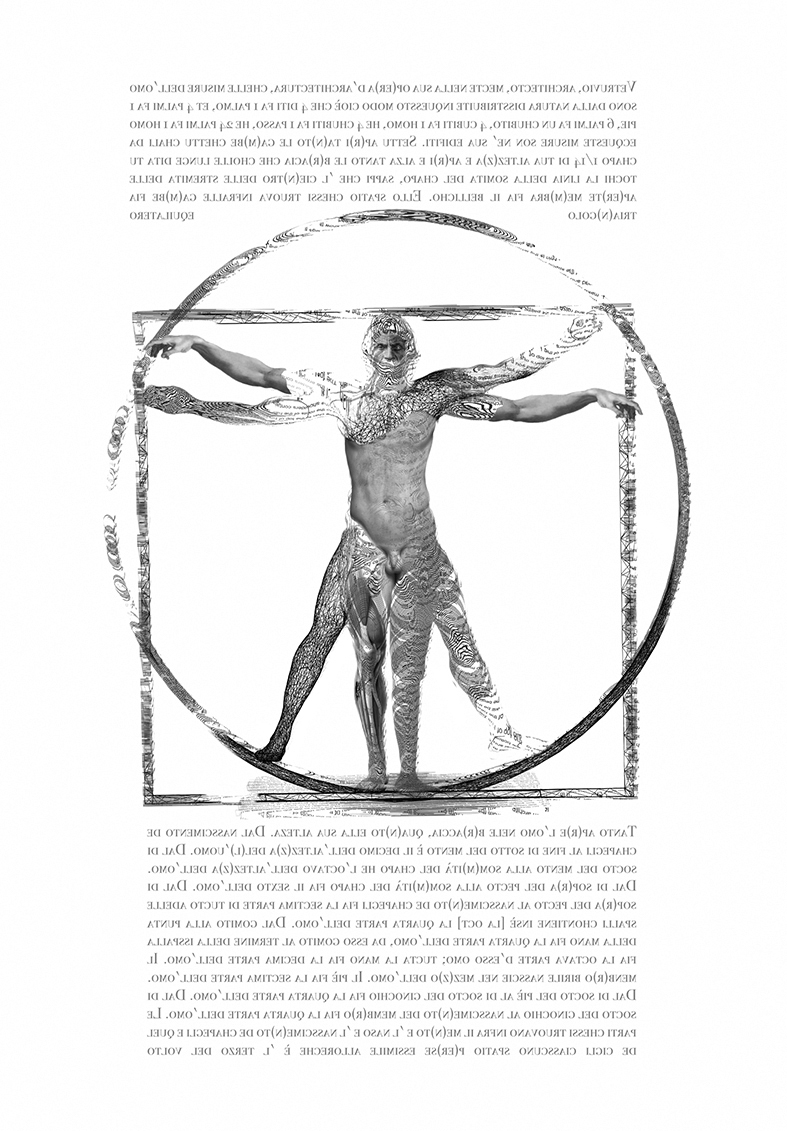
Paweł Kowalski
Podstawą mojego projektu stał się symbol humanistyki – Człowiek witruwiański Leonarda da Vinci, słynne przedstawienie anatomiczne mężczyzny. Temat inter- dyscyplinarności przejawia się w mojej pracy poprzez zacieranie się granic różnych dziedzin oraz mediów sztuki.
Praca przedstawia reinterpretację Człowieka witruwiańskiego, zbudowaną z wielowarstwowej mozaiki elementów kultury i sztuki. Klasyczna sylwetka z rysunku Leonarda da Vinci została tu odtworzona przy użyciu różnorodnych form ekspresji: pulsujących fal dźwiękowych, fragmentów malarstwa, fotografii, topologii trój- wymiarowej, rzeźby oraz liter ukladających się w delikatne struktury.
W efekcie powstaje figura, która wyraża jednocześnie harmonię renesansowego ideału i złożoność współczesnego człowieka, stanowiąc wizualną metaforę jednoś- ci sztuk i nieustannego dialogu między nimi.
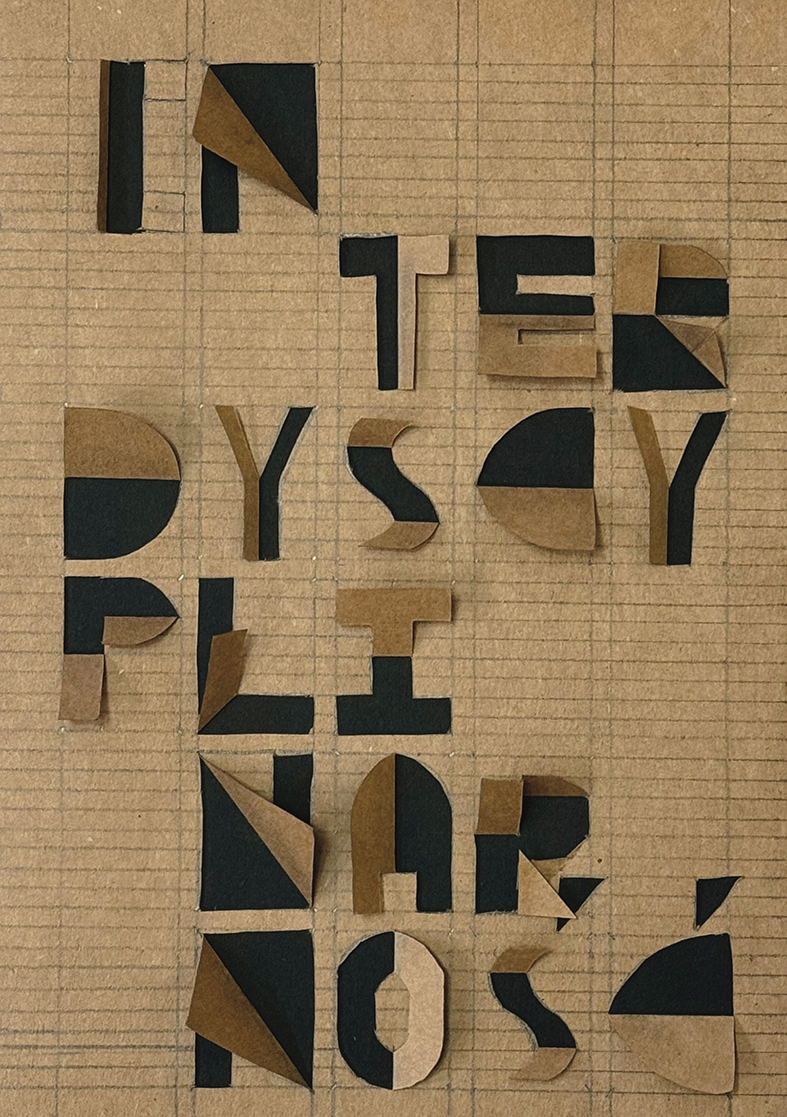
Gabriela Lis
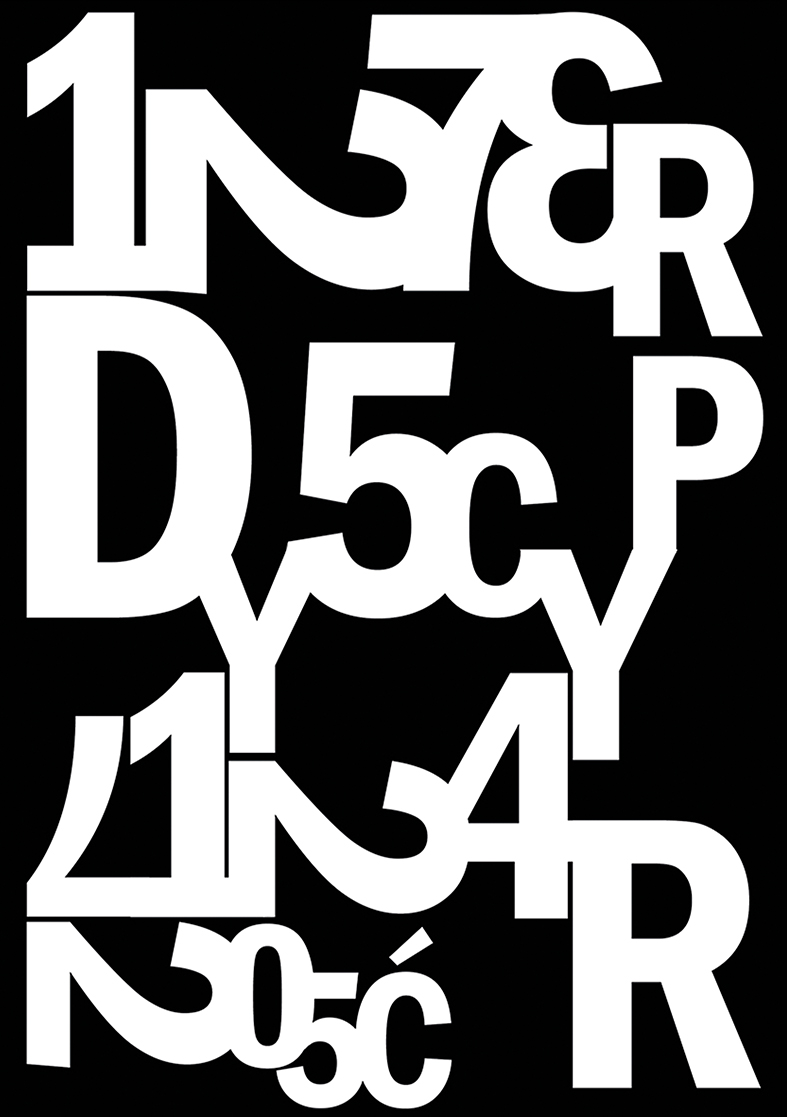
Interdyscyplinarność to dla mnie swobodne działanie artystyczne, w którym arty- sta podczas tworzenia nie ogranicza się ramami definiującymi techniki plastyczne i artystyczne. Interdyscyplinarność jest środkiem wyrazu pogłębiającym interpretację dzieła sztuki, wzbogaca jego formę, może potęgować wrażenie wywierane na odbiorcach oraz wpływ na ich zmysły.
Usystematyzowana siatka linii wytwarza obszary, w których powinny zostać wyrysowane litery. Są niczym obszary sztuki dzielące ją na poszczególne dyscypliny. Nie wartościują jednak, ale wyznaczają dziedzinę, w której artysta może się poruszać. Pomimo że litery wymykają się tym ramom, i tak tworzą czytelny dla odbiorcy przekaz. Zarówno poruszanie się wewnątrz zdefiniowanych ram sztuki, jak i ich przekraczanie są dla artysty środkami wyrazu. Dopiero ich harmonijne współwystępowanie umożliwia sztuce funkcjonowanie w dynamicznie zmieniającym się współczesnym świecie.
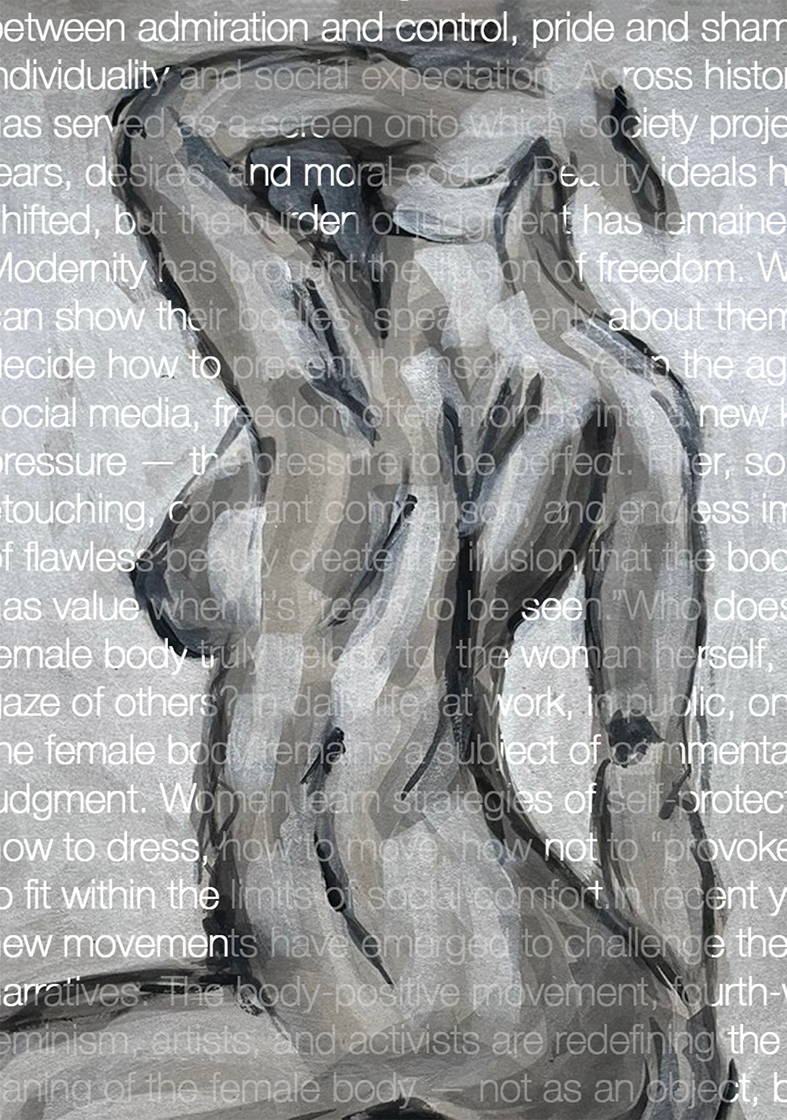
Emilia Strażecka
The female body
The female body has long been a site of tension, between admiration and control, pride and shame, individuality and social expectation. Across history, it has served as a screen onto which society projects its fears, desires, and moral codes. Beauty ideals have shifted, but the burden of judgment has remained. Modernity has brought the illusion of freedom. Women can show their bodies, speak openly about them, decide how to present themselves. Yet in the age of social media, freedom often morphs into a new kind of pressure, the pres- sure to be perfect. Filters, retouching, constant comparison, and endless images of flawless beauty create the illusion that the body only has value when it’s “ready to be seen.” Who does the female body truly belong to, the woman herself, or the gaze of others? In daily life, at work, in public, online, the female body remains a subject of commentary and judgment. Women learn strategies of self-protection: how to dress, how to move, how not to “provoke,” how to fit within the limits of social comfort. In recent years, new movements have emerged to challenge these narratives. The body-positive movement, fourth-wave feminism, artists, and activists are redefining the meaning of the female body, not as an object, but as a sub- ject. A body that can be strong, tired, diverse, scarred, aging, postpartum, recovering, and still beautiful because it’s real. The body becomes a language, a way to tell stories about experience, boundaries, vulnerability, and strength. It becomes a space where the per- sonal meets the political, where intimacy meets defiance. Perhaps the greatest challenge of our time is learning to look at the female body without judgment, not as a product, not as a statement, but as a form of existence. One that owes no explanation. Because the female body is not an image to be corrected.
Dominik Bański
Reprezentacja ruin w tekście
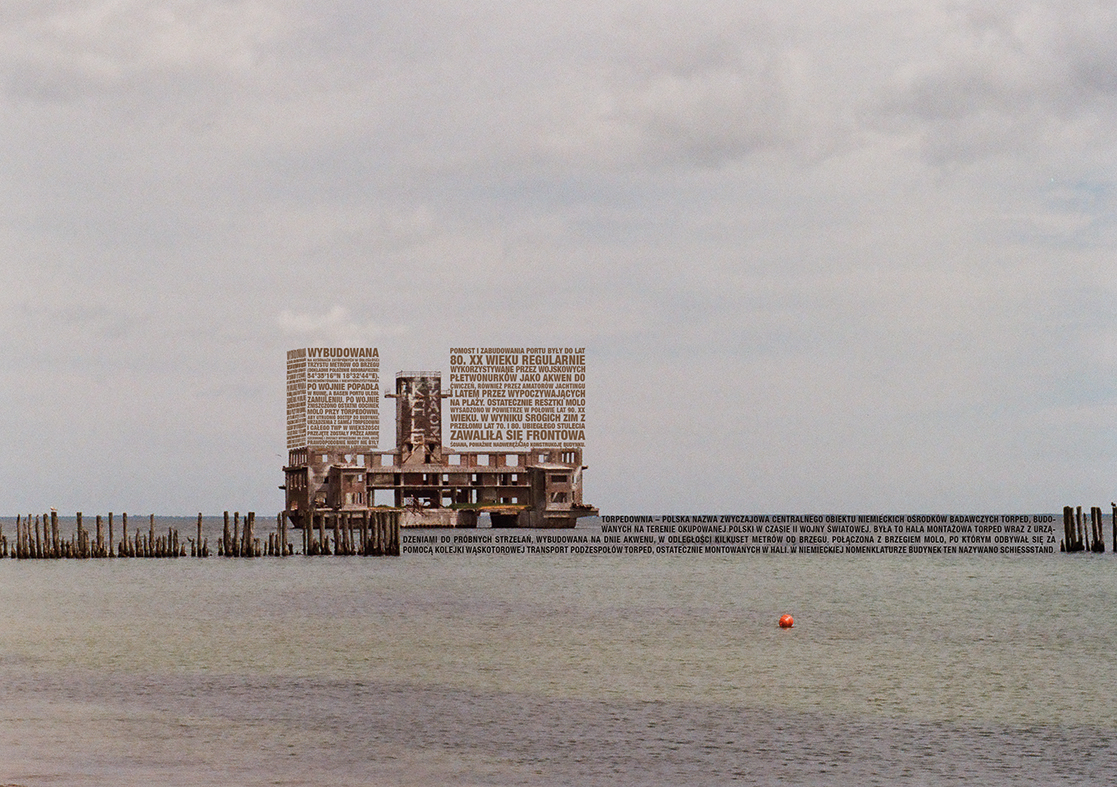
Punktem wyjścia mojej pracy jest fotografia zrujnowanej torpedowni w Gdyni, czyli materialnego śladu historii, który z czasem fizycznie zanika. Symbolicznie „odbudowuję” ruiny za pomocą typografii – tekstu będącego historycznym opisem budynku. To, co w rzeczywistości uległo destrukcji, uzupełniam tym, co o nim napisano.
„Granice interdyscyplinarności” odnoszą się w moim projekcie do spotkania dwóch porządków: wizualnego i tekstowego, artystycznego i historycznego. Ruina staje się miejscem splotu materii i języka. Tekst staje się narzędziem rekonstrukcji. Typografia nie tylko odtwarza formę architektoniczną, ale też przywraca znaczenia, które przetrwały jedynie w dokumentach i narracjach. Proponuję refleksję nad możliwością reprezentacji pamięci o ruinie poprzez niematerialne medium.
Źródło: https://pl.wikipedia.org/wiki/Torpedownia
Albert Horoszkiewicz
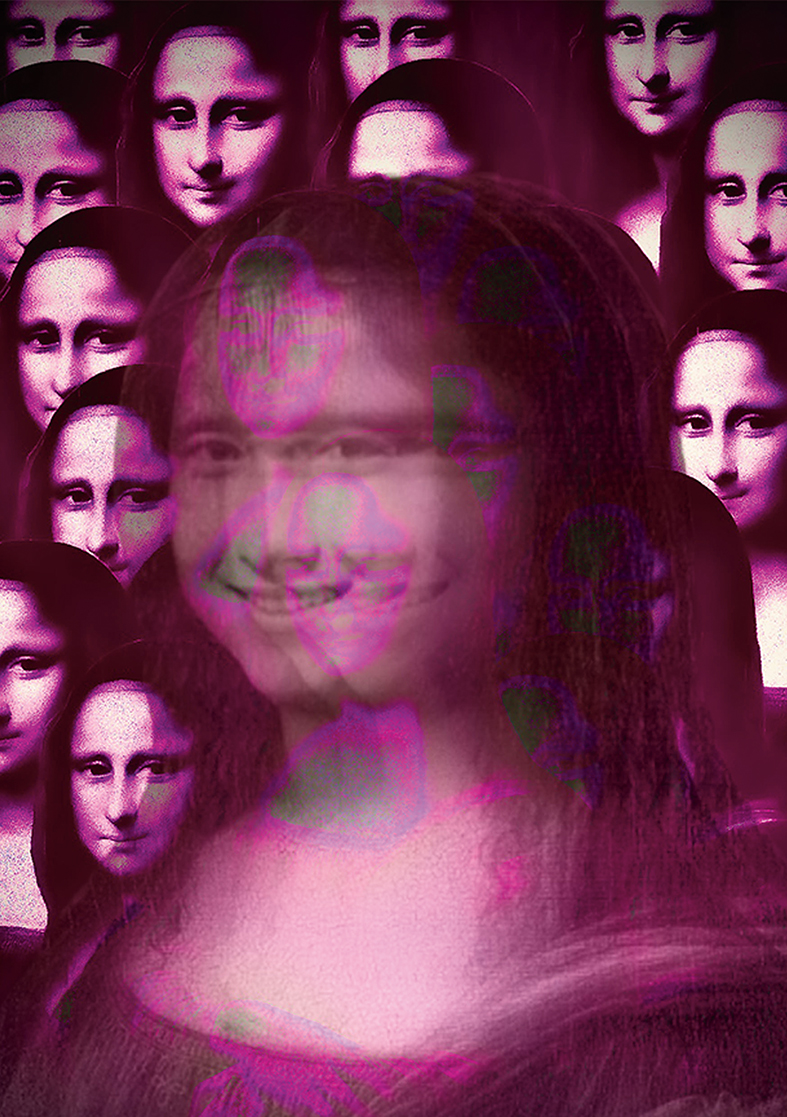
Praca „ML6CMYK” jest wykonana na podstawie obrazu Leonarda da Vinci Mona Lisa, którego fotografia zostaje następnie poddana obróbce graficznej i przetwo- rzona kilkukrotnie przez oprogramowanie AI. W procesie biorą udział różne me- dia – fotografia, grafika, malarstwo, obróbka z użyciem sztucznej inteligencji, przez co obraz coraz bardziej oddala się od swojej oryginalnej formy. Wieloetapowość tej ewolucji skłania do stawiania pytań o definicję autorstwa, jako że efekt końcowy jest skutkiem wykorzystania pracy licznych artystów, do grona których zaliczyć można nie tylko twórcę oryginalnego obrazu, ale także autora jego fotografii, ar- tystów, których dzieła wykorzystane zostały do treningu sztucznej inteligencji, autorów oprogramowania, a także mnie, poddającego obraz obróbce graficznej oraz piszącego prompty dla AI.
Fiona Schmidt
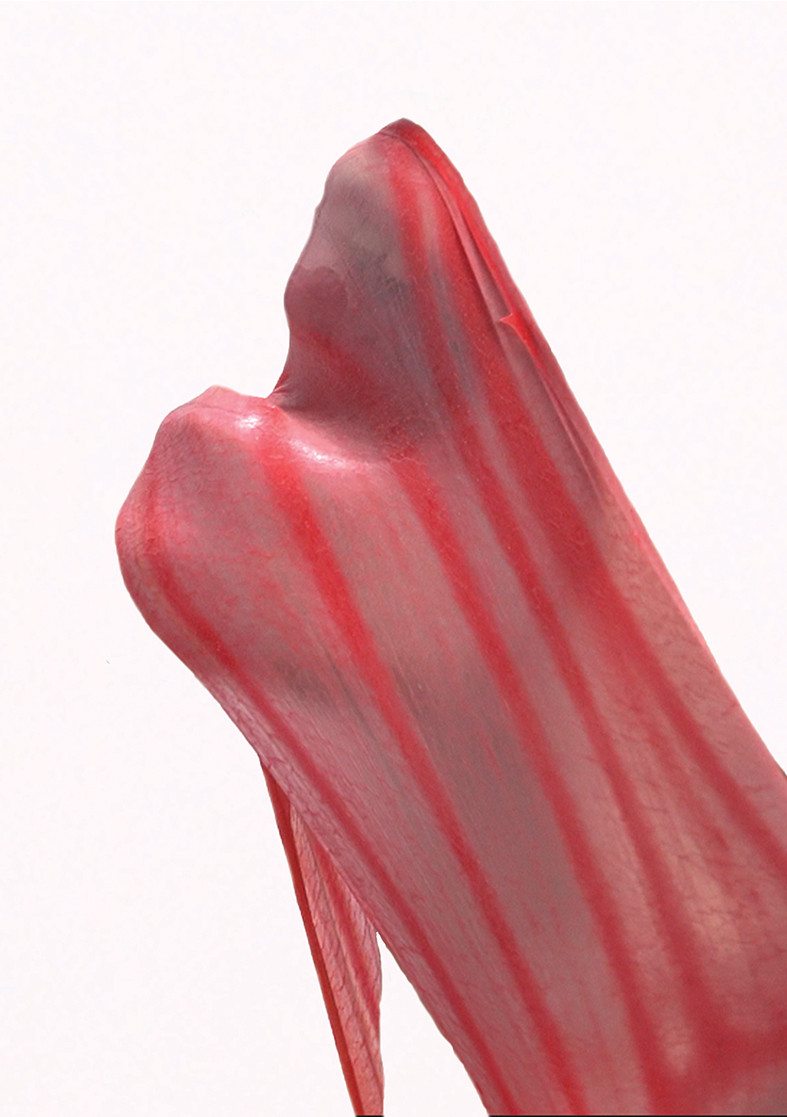
Granice interdyscyplinarności są cały czas przekraczane i ustalane na nowo. To limity wyznaczane przez prawa fizyki, moralność czy ludzką wyobraźnię. Plakat opowiada o chwili napięcia, w której granica człowieka została przekroczona, ale material nadal walczy. To rodzaj testu wytrzymałości, który nie ujawnia jeszcze, czy materia wyznaczy kolejną granicę. Odzwierciedla ją cienka membrana wyko- nana z płynnego lateksu, naciągnięta przez twarz do granic wytrzymałości materiału.
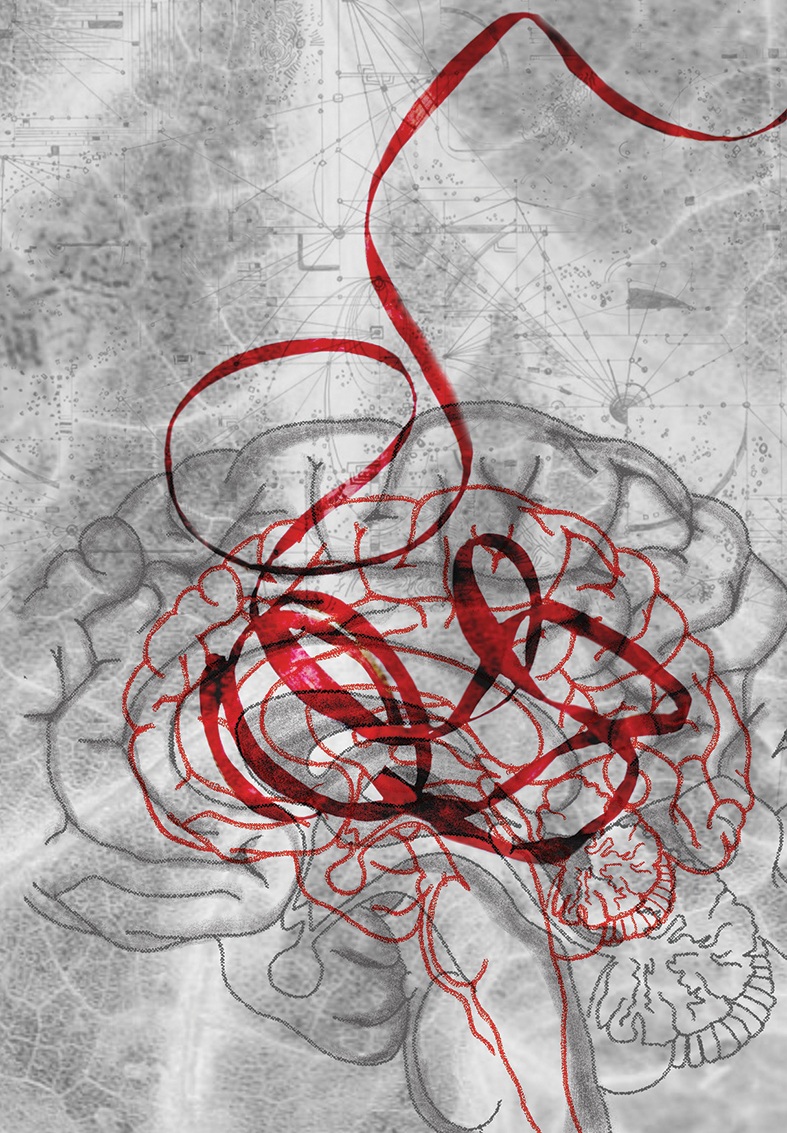
Eva Sáenz-Díez
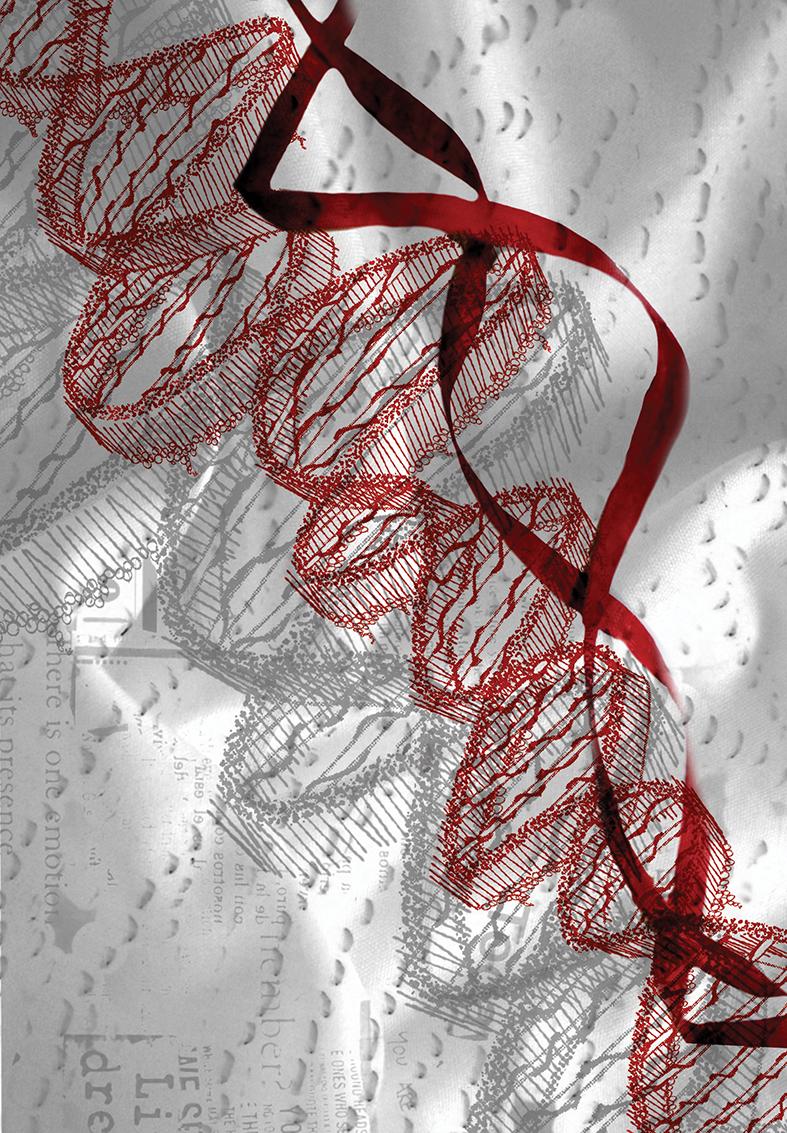
Projekt opiera się na idei, że sztuka i nauka są głównymi filarami ludzkiej wiedzy. Obie mają ten sam cel: rozumieć, tworzyć i zmieniać rzeczywistość, nawet jeśli używają różnych sposobów, by to osiągnąć. DNA i mózg, przedstawione za pomocą różnych pędzli i obiektów artystycznych, pokazują połączenie między naukową precyzją a wrażliwością twórczą. Na tej podstawie projekt rozciąga się na inne dziedziny, które kształtują ludzkie doświadczenie: naturę pokazującą nasze biologiczne pochodzenie; społeczeństwo ukazujące powiązania i różnice między ludźmi oraz kulturę obejmującą język i sposób przekazywania wiedzy. Zdjęcia i teks- tury w tle reprezentują te dziedziny, tworząc wizualną sieć, która pokazuje, jak wszystkie dyscypliny są ze sobą połączone i wzajemnie się wspierają – podobnie jak dzieła sztuki, tak i ludzie ksztaltują się dzięki innym, dzięki swemu pochodzeniu i biologicznym więzom.
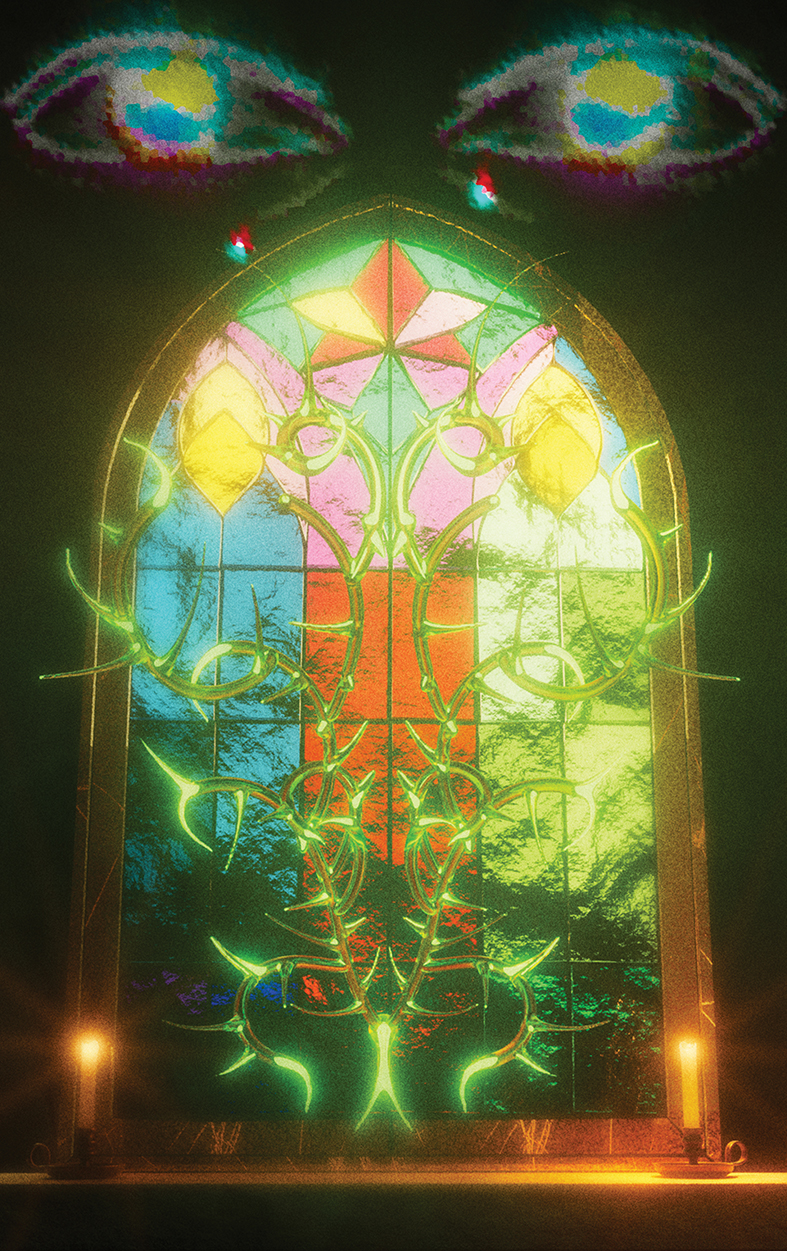
João Magalhães
Wielobarwny witraż oświetlony świecami symbolizuje unię dyscyplin, które, niczym odrębne kolory, tworzą bogatszy obraz, gdy ze sobą dialogują. Przeplatające się na nim organiczne linie przywołują twórczy potencjał interdyscyplinarności, ale także wpisane w nią ryzyko dezorientacji i przesady. Samo światło przechodzące przez szkło sugeruje potrzebę krytycznej czujności, aby jasność wiedzy nie stała się oślepiająca. Czujne oczy nad witrażem stoją na straży tych zmieniających się granic, przypominając nam, że interdyscyplinarność wymaga ciągłej świadomości i odpowiedzialnego rozeznania.
W ten sposób, podobnie jak we współczesnej humanistyce, piękno, złożoność i odpowiedzialność współgrają ze sobą.
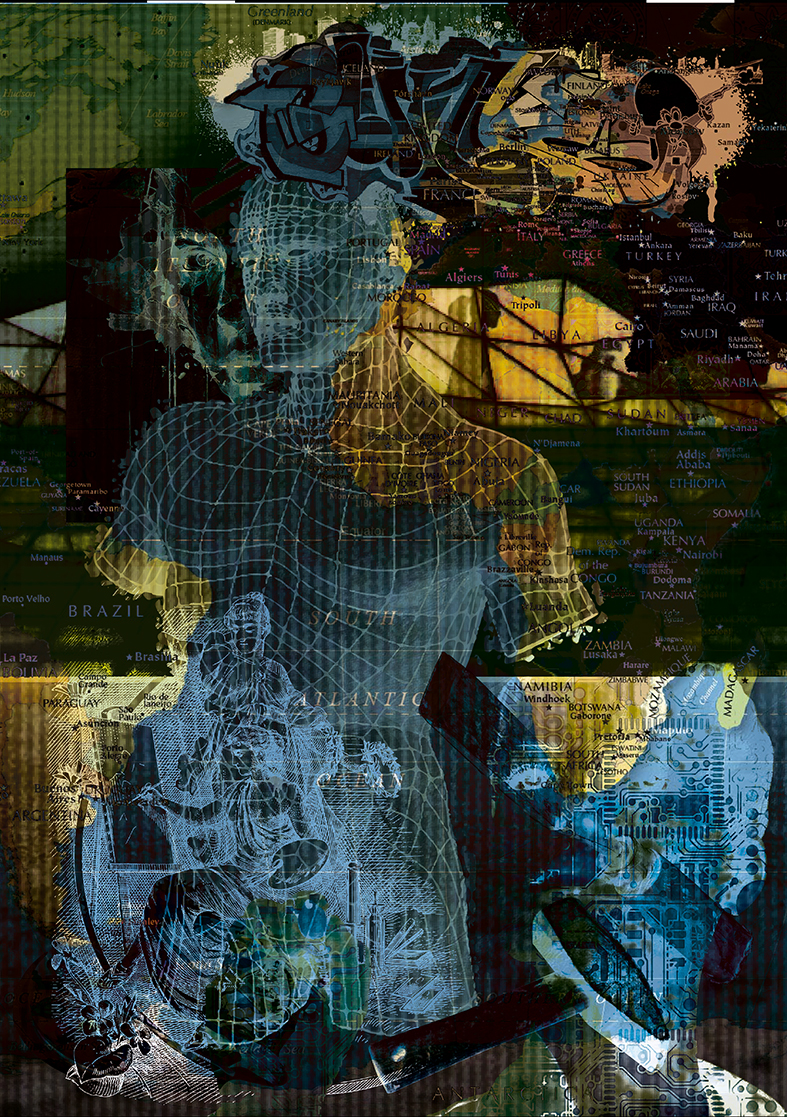
Gabriela Rukat
Interdyscyplinarność, przez ogólnodostępność materiałów naukowych, artystycznych czy rzemieślniczych, staje się polem bez ograniczeń. Brak ograniczeń nato- miast bywa nie tylko możliwością i potencjałem, ale też ryzykiem. Możemy stworzyć przez to coś nieczytelnego, niejasnego, zbyt skomplikowanego, by poprawnie odebral to ktoś inny niż twórca. Mimo to, teraz, gdy umieszczamy wiele motywów, pojęć i technik w jednym tworze, zwłaszcza artystycznym, nazywamy to interdyscyplinarnością. Kiedyś tak dużą ilość różnych treści w jednym obiekcie nazywało się najzwyczajniej – kiczem. Osobiście, dawno nie słyszałam tego słowa. Myślę, że to może być powód – kicz znika, a na jego miejsce wchodzi interdyscyplinarność. Nie ma estetycznie nadmiernej, intensywnej, ponad-treściwej sztuki. Wszystko jest akceptowalne. Nie ma granic w środkach, w zapożyczaniach stylów, w fuzjach estetyk. Każdy inaczej oceni, czy to dobrze, czy nie, bo każdemu oczywiście podoba się coś innego. Jednak niewątpliwie słowo „kicz” znika z leksykonu opisującego sztukę na rzecz ekspansji „interdyscyplinarności”.
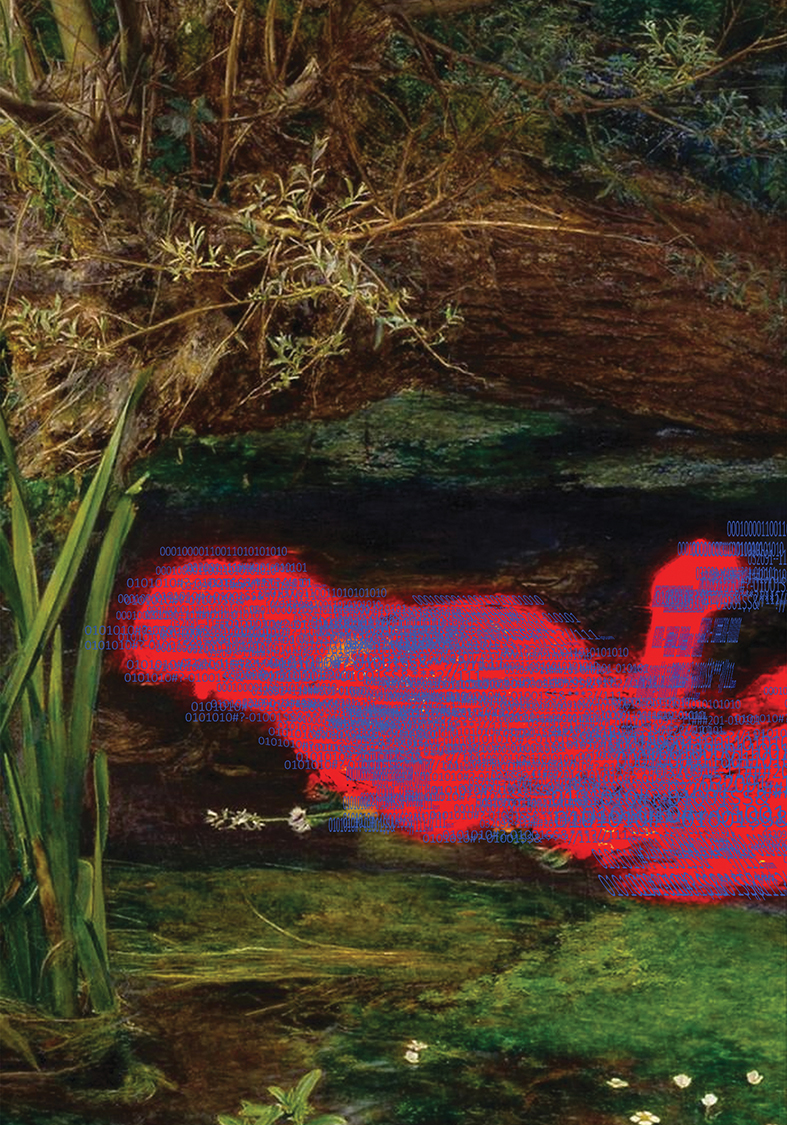
Amelia Płoska
W tej pracy klasyczny obraz Ofeli Johna Everetta Millais go zostaje przecięty strumieniami kodu binarnego, które niczym glitch rozlewają się po powierzchni rzeki. Intermedialność polega tu na zderzeniu dziewiętnastowiecznego malarstwa z językiem maszynowym, co prowadzi do przepisania historii obrazu na nowo – z perspektywy cyfrowego krajobrazu. Kod staje się zarówno zasłoną, jak i nowym medium narracji, podważając autentyczność pierwowzoru i wprowadzając element cyfrowej nekromancji. To spotkanie tradycyjnej reprezentacji z technologicznym zapisem ujawnia, jak współczesność rekonfiguruje pamięć obrazów.
Halyna Hrytsiuk
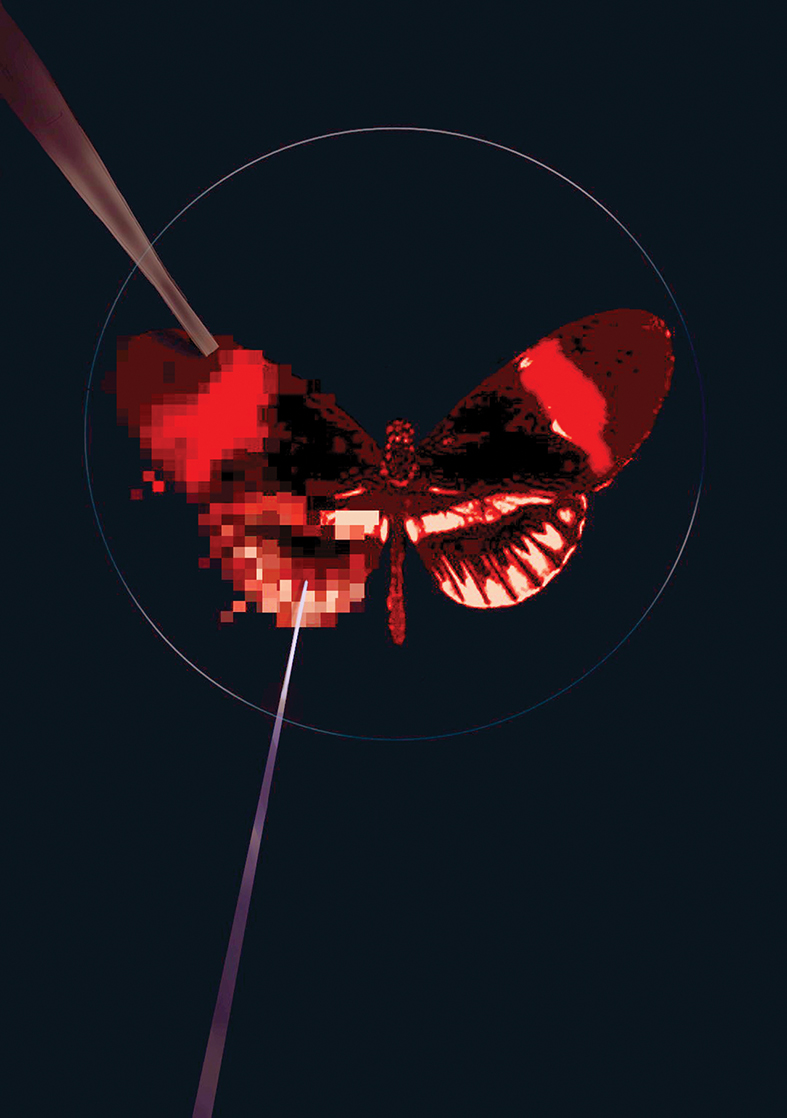
Moja grafika została zainspirowana projektem portugalskiej artystki Marty de Menezes. We wspólpracy z naukowcami zmodyfikowała ona wzory na skrzydłach motyli, zmieniając układ kolorowych łusek we wczesnych stadiach rozwoju. Ten akt ukazuje ingerencję człowieka w naturę – człowiek zmienia kod genetyczny istot żywych, tworząc wzory na ich ciałach.
Projekt zadaje pytanie: czy potrafimy zmieniać naturę, nie czyniąc z niej własnego śladu? I co pozostaje z żywych istot, gdy dotyka ich technologia?

Zofia Urbaniak
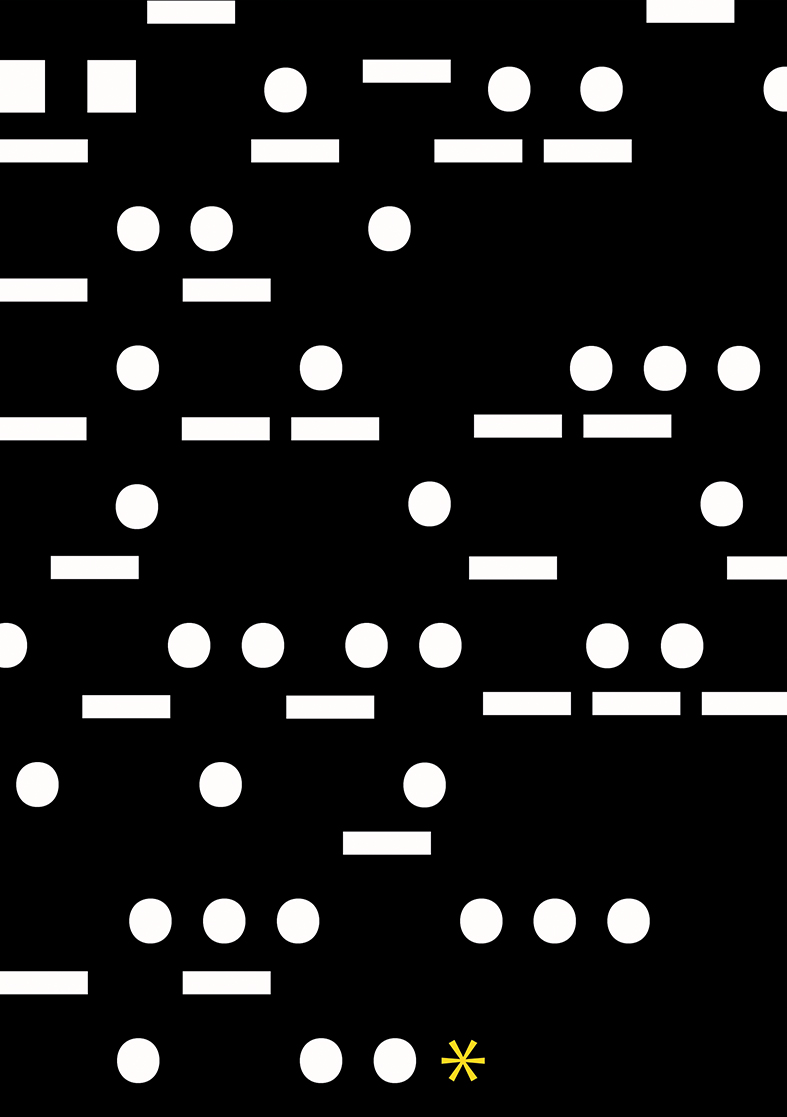
Interdyscyplinarność opiera się na łączeniu kompetencji i metod, ale jej prawdziwym spoiwem jest komunikacja, bo to ona umożliwia wymianę idei i wzajemne zrozu- mienie. Granice wiedzy ujawniają się tam, gdzie porozumienie staje się niemożliwe, kiedy brakuje wspólnego języka. Języki pozawokalne – od kodów matematycznych po gesty i migi – pokazują, że komunikacja nie ma jednego kanału, lecz tworzy wielowarstwową sieć zależności między różnymi dyscyplinami, sposobami percepcji i formami wyrazu. Metody przekazywania informacji stanowią dla mnie istotę interdyscyplinarności, dlatego w swoich pracach postuguję się szyframi.
* Słowo „interdyscyplinarność” zapisane alfabetem Morse’a.
Zuzanna Jazowska
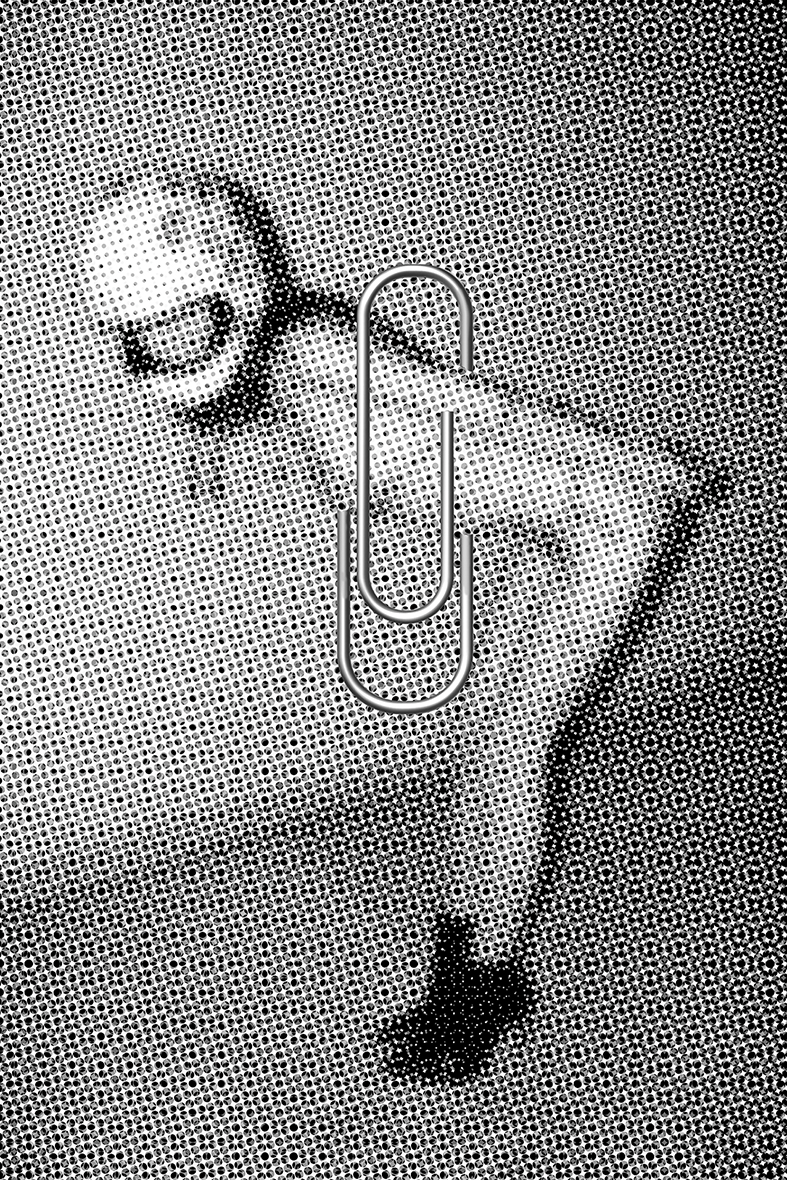
Grafika jest mieszaniną zdjęcia, obróbki komputerowej i estetyki starego druku. Właśnie w tym tkwi jej interdyscyplinarność – praca łączy elementy i techniki, które normalnie nie występują razem: fotografię, grafikę użytkową, pop-artowy raster i symbol biurowego przedmiotu. Spinacz dodatkowo działa jak metafora: coś, co jednoczy różne elementy w całość. Dzięki temu całość mówi o sztuce, która nie trzyma się jednej „szufladki”, tylko swobodnie korzysta z różnych narzędzi, estetyk i pomysłów.

Paulina Hanko
Granice się zacierają.